May 29, 2026 • James Barrett • 9 min reading time • Prices verified June 24, 2026
18/10 Stainless, Silver-Plate, or Sterling: How to Choose the Right Metal for Your Table
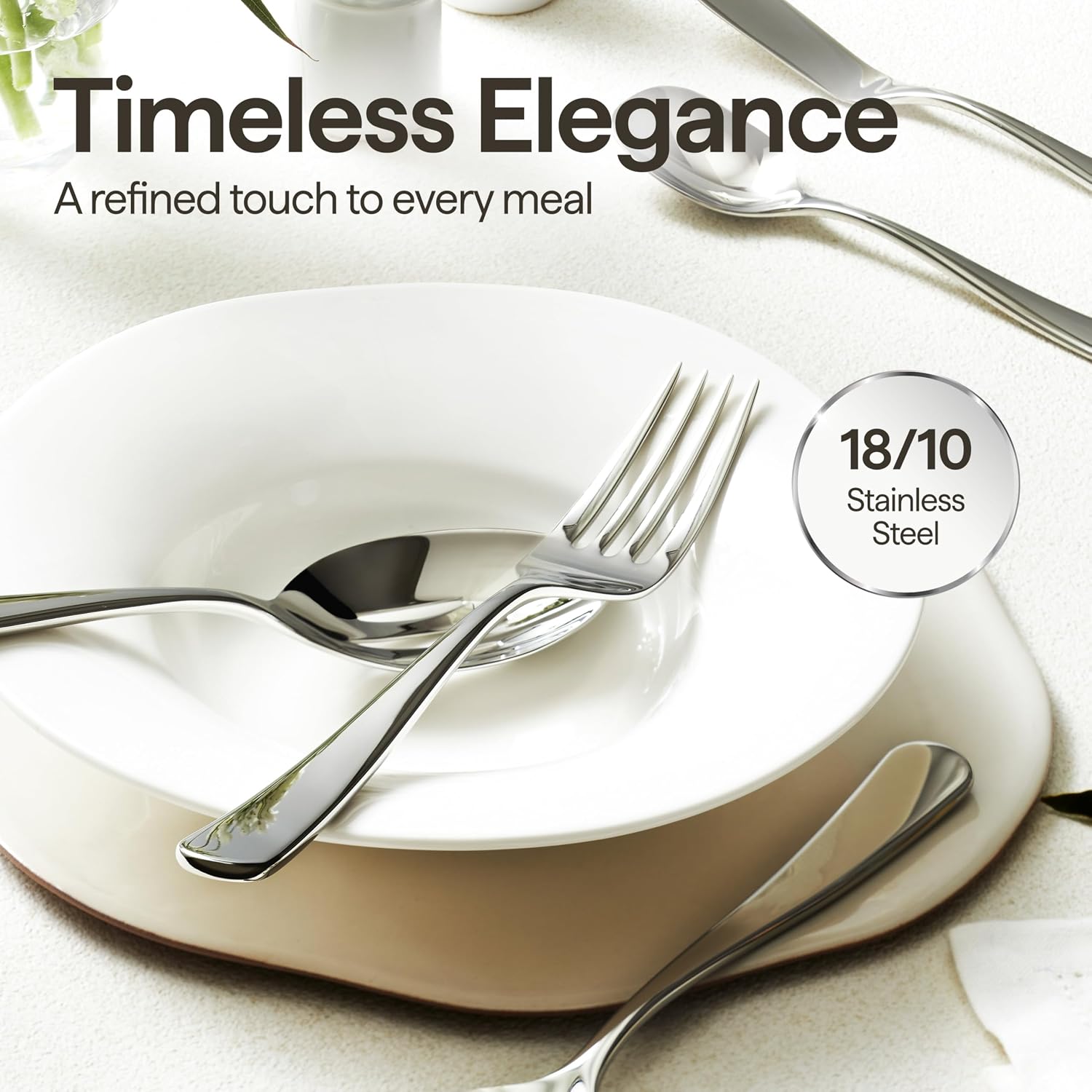
Picture three forks side by side on a linen tablecloth. They look nearly identical — the same basic shape, similar weight, probably the same price range if you’re buying mid-market. But pick them up one at a time and you’ll notice the differences almost immediately: one is lighter and has a cool, industrial shine; another has a warmer, slightly softer gleam and a barely perceptible flex; the third feels noticeably heavier, almost buttery in the hand, and its surface has a depth that catches light differently depending on the angle. Those three forks are made of three different metals — 18/10 stainless steel, silver-plate, and sterling silver — and choosing between them is one of the most consequential decisions you’ll make when building a flatware collection. Not because one is definitively “best,” but because each one asks something different of you: a different budget, a different care routine, and a different relationship with the idea of what your table is for. This guide lays out that decision clearly, with the numbers and tradeoffs named explicitly, so you can move forward with confidence rather than guesswork.
What the Numbers and Terms Actually Mean
Before comparing the three metals, it helps to know exactly what each label signifies — because the terminology is genuinely confusing and marketers don’t always make it easier.
18/10 stainless steel is an alloy: 18% chromium and 10% nickel, the remainder iron. The chromium creates the passive oxide layer that resists rust and corrosion; the nickel content increases luster and resistance to pitting. Published spec sheets from manufacturers like Mepra and Sambonet consistently note that 18/10 is the industry’s benchmark for professional and premium consumer flatware — it’s what you’ll find in nearly every Michelin-starred Italian restaurant that isn’t using custom silver. The Spruce Eats’ flatware buying guide confirms that 18/10 is the highest stainless grade commonly available to consumers, contrasting it with cheaper 18/0 (no nickel, more prone to rust) and 13/0 formulations used in budget catering ware.
Silver-plate means a base metal — typically brass, copper, or in the case of most Italian manufacturers, a nickel-silver alloy called alpacca — that has been electroplated with a layer of pure silver. The thickness of that silver layer is measured in microns and varies significantly. The standard you’ll see cited most often from European makers (Greggio, Broggi, Christofle) is expressed in grams of silver per square decimeter of surface; a higher micron count means longer wear before the base metal shows through on high-contact areas like knife edges and fork tines. 925-1000.com’s hallmarking reference explains that European silver-plate standards are generally more rigorous than U.S. equivalents, and Italian makers who comply with EU plating disclosure requirements are legally obligated to specify the silver thickness — look for that disclosure as a provenance signal.
Sterling silver is 92.5% pure silver alloyed with 7.5% copper (or sometimes germanium in modern formulations) for hardness. The 925 hallmark certifies this ratio. True sterling flatware — think Buccellati, older Broggi services, or bespoke Florentine commissions — contains meaningful intrinsic metal value that tracks directly against the LBMA silver spot price. As of mid-2026, silver spot is holding in the $29–$32 per troy ounce range (London Bullion Market Association daily fixes, May 2026). A full twelve-cover sterling service from a quality maker can contain 80–120 troy ounces of silver depending on pattern weight, meaning the melt value alone is $2,400–$3,800 before any craftsmanship premium.
Comparing the Three on the Axes That Actually Matter
Durability and Daily Usability
18/10 stainless wins this category without much argument for anyone who intends to use their flatware regularly rather than display it. Owners of Mepra and Sambonet professional-line pieces consistently report decades of daily dishwasher use with no structural degradation — the 18/10 spec holds up to commercial-grade cleaning cycles that would destroy a silver-plate service in a few years. Food & Wine’s flatware research notes that 18/10 stainless is the default specification for every tier of professional hospitality service precisely because it requires no special handling and tolerates the mechanical abuse of high-volume service.
Silver-plate is the middle child here, and its durability is entirely a function of plating thickness. A well-plated Italian service — Greggio’s 150-gram-per-square-decimeter specification, for example — can last 30–50 years with careful hand-washing, according to care documentation published by specialist dealers on Replacements Ltd. But put it in the dishwasher consistently, let it soak, or store it loose in a drawer, and you’ll see wear on tine tips and knife bolsters within five years. This is not a flaw; it’s a constraint you have to decide you can live with.
Sterling silver is paradoxically both more durable (it won’t “wear through” the way plate does — the silver goes all the way down) and more demanding. It tarnishes. It scratches. It requires polishing. But the patina it develops — what silversmiths call “butler’s finish” — is, to many collectors, the entire point. Architectural Digest’s coverage of heirloom flatware consistently frames sterling’s aging as a feature: each scratch and subtle darkening in the recesses of an engraved pattern records the history of the piece.
By the Numbers
| Metal | Avg. Cost Per Place Setting | Dishwasher Safe? | Tarnishes? | Intrinsic Melt Value |
|---|---|---|---|---|
| 18/10 Stainless | $80–$400 | Yes | No | Negligible |
| Silver-Plate | $150–$600 | No (hand-wash only) | Yes | Minimal (trace silver) |
| Sterling Silver | $300–$800+ | No (hand-wash only) | Yes | Significant (tracks spot) |
Price ranges reflect Italian-made collections available through authorized retailers as of May 2026. Sterling melt value based on LBMA silver spot $29–$32/ozt.
Cost Structure and Long-Term Value
The honest framing here is that these three metals have completely different cost structures — not just different price points.
18/10 stainless is a capital purchase with negligible ongoing cost. You buy it once, wash it in the dishwasher, and it is essentially done. The depreciation curve is flat. If you sell a Mepra or Sambonet service secondhand in fifteen years, you’ll recover a fraction of retail (demand for discontinued stainless patterns is thin outside of a few collector niches), but you’ll have used it hard and happily the whole time.
Silver-plate has a hidden ongoing cost: professional re-plating, which runs $15–$40 per piece depending on complexity, required roughly every 20–40 years for a well-cared-for service. Build that into your math if you’re buying with a multi-generational horizon. The upside is that a complete, well-documented Italian silver-plate service from a recognized maker (Broggi, Greggio, Christofle’s Italian collaboration pieces) holds collectible value that straight stainless rarely achieves. Replacements Ltd’s pattern database shows consistent secondary-market demand for complete Italian silver-plate services, with premiums for original storage cases and documentation.
Sterling’s cost structure is the most interesting. You are buying a hybrid: part luxury object, part commodity silver position. The craftsmanship premium — what you pay above melt — can be enormous for a named maker like Buccellati, or relatively modest for a straightforward Florentine smithed service. That premium compresses and expands with collector demand. But the melt floor never disappears, which means a sterling service is the only flatware metal that cannot, in theory, go to zero. Per italianmade.com’s coverage of Valenza’s silversmithing ateliers, many family-run Italian workshops will repurchase or accept in trade sterling services they originally made, treating the silver content as an offset against new commissions — a liquidity characteristic no other flatware metal offers.
Care Requirements as a Lifestyle Decision
This is the axis most buyers underestimate, and it’s where the decision often actually gets made.
18/10 stainless asks almost nothing of you. Dishwasher, drawer, done. This is not a consolation prize — it’s a genuine design virtue if your life involves frequent entertaining, children at the table, or a kitchen where everyday beauty matters as much as formal beauty.
Silver-plate and sterling both require hand-washing with mild soap, immediate drying, and storage in tarnish-resistant cloth rolls or anti-tarnish drawer liners. They both require periodic polishing — owners of actively-used sterling services typically report polishing two to four times per year with a quality cream polish (Wright’s Silver Cream is the most commonly cited by collectors; Hagerty’s is mentioned frequently in Replacements Ltd’s care resources). The labor is not enormous — maybe 20–30 minutes for a full twelve-cover service — but it is a ritual, and you have to want the ritual, or at minimum not resent it.
The Decision Framework: If X, Then Y
Here is the honest matrix. If you are trying to close a decision, use this directly.
If you entertain frequently, have children at the table, or value zero-maintenance above all → 18/10 stainless is the correct choice. Look at Mepra’s Vintage or Sintesi lines, or Sambonet’s Studio line, for the combination of Italian craftsmanship and genuine everyday durability. You are not settling; you are making the rational choice for your actual life.
If you are building a registry or entertaining collection with one formal service you will use 6–20 times per year, and you want something that ages beautifully and holds collector value → silver-plate from a named Italian maker is the sweet spot. Greggio and Broggi both offer services where the pattern design and plating quality justify the care commitment. Buy the storage case. Hand-wash from day one.
If you are thinking about flatware as a multi-generational heirloom, a collector position, or both — and you understand that you are buying a luxury object with a silver floor → sterling is the answer, and the maker matters enormously. Complete Buccellati services, documented Florentine commissions, and silver-hallmarked pieces with provenance command the deepest secondary market. Track the LBMA spot price and buy when silver softens; the craftsmanship premium is fixed but the metal cost isn’t.
If you are a hospitality buyer specifying for a restaurant or private club → 18/10 is almost certainly correct for operational ware, with silver-plate reserved for a signature captain’s service or tableside presentations where the visual and tactile impression of silver matters to your guest experience but you need the pieces to survive professional kitchen handling with careful protocols.
If you are a collector completing a discontinued pattern → metal type is largely predetermined by what the original service was. Replacements Ltd and specialist dealers like those serving the Buccellati and Christofle Italian-collaboration secondary market sort inventory by pattern and metal; your job is authentication of plating thickness and hallmark consistency, not metal selection.
The perfect flatware, ultimately, is the one that fits the table you actually set — not the table you imagine setting once a year. Start from that honest self-assessment and every other variable falls into place more easily than you’d expect.