June 9, 2026 • James Barrett • 9 min reading time • Prices verified June 24, 2026
Storing Flatware Like a Collector: Tarnish-Proof Chests, Felt Liners, and the Case for a Proper Silverware Cabinet
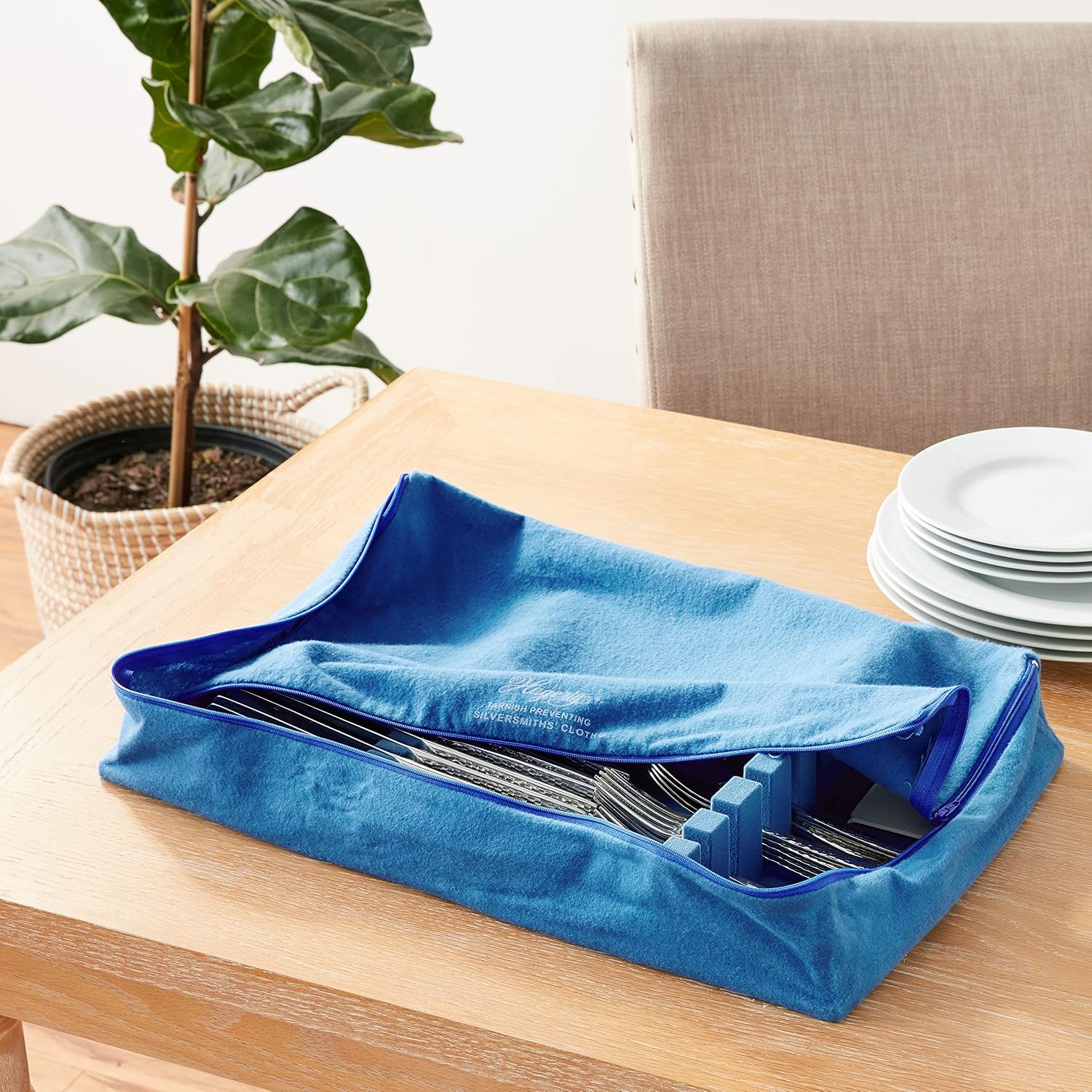
If you’ve just received your first set of Italian sterling-plated flatware — or you’re about to — one thing nobody warns you about is what happens after the unboxing. Silver, whether it’s solid sterling (marked .925, meaning 92.5% pure silver), silver-plated (a base metal core coated in silver), or high-grade stainless, reacts with sulfur compounds in the air and forms a dark film called tarnish. It’s completely natural, reversible, and — with the right storage — almost entirely preventable. The trouble is that most people store flatware the way they store everything else: in a drawer, loosely, without thinking much about it. For a $40 set of stainless that’s fine. For a twelve-piece Ricci Argentieri place setting you intend to hand down to a grandchild, it’s quietly destructive. This guide walks you through the storage decisions that actually matter — and the tradeoffs between them — so you can protect what you’re building without overthinking it.
Why Tarnish Happens (and What’s Actually Attacking Your Silver)
Before you can make a good storage decision, you need a working model of the enemy. Tarnish is silver sulfide — a chemical reaction between the silver on your flatware and hydrogen sulfide gas that exists in trace amounts in almost every indoor environment. Sources include natural gas combustion, certain paints and adhesives, wool fibers, rubber bands, latex gloves, and even some wood finishes. The reaction accelerates with heat and humidity. A piece stored at 70°F / 50% relative humidity tarnishes measurably slower than the same piece stored at 80°F / 70% RH, which is why summer kitchens and coastal homes are harder environments for silver than climate-controlled dining rooms.
The 925-1000.com reference database, which tracks silver chemistry for the trade, notes that sulfur isn’t the only culprit: chlorides from salty air and chlorine-treated tap water also attack silver over time, and oxygen-driven oxidation darkens silver at a slower but cumulative rate. Silver-plated flatware — including most of the Greggio and Sambonet silverplate lines — faces an additional risk: if the plating layer is compromised by scratching or acidic contact, the base metal beneath (typically brass or copper) begins to oxidize in ways that no amount of polishing can fully reverse. That’s why storage isn’t a cosmetic concern; it’s a preservation concern.
The good news: all of this is addressable with systems that range from about $30 to several hundred dollars, and the right choice depends on your collection’s scale, your usage frequency, and how much of your storage is decorative versus purely functional.
The Storage Spectrum: Drawer Rolls to Full Silverware Cabinets
Anti-Tarnish Drawer Rolls and Chest Inserts (Entry Point: $30–$120)
For collectors who use their flatware regularly — meaning monthly or more — anti-tarnish flannel rolls and chest inserts are the practical workhorse. The key material is Pacific Silvercloth or its equivalents: a silver-impregnated flannel that works through two mechanisms. First, it physically isolates pieces from the air; second, the embedded silver particles attract and bind hydrogen sulfide molecules before they can reach your flatware. The Smithsonian Institution’s Collections Care documentation references silver-impregnated cloth as a conservation-appropriate first-line storage material for silver objects in active use — significant institutional endorsement for something you can buy at most kitchen specialty shops.
Tradeoff to name explicitly: Pacific Silvercloth and similar fabrics are not indefinitely effective. The silver particles in the cloth gradually become saturated with sulfide compounds over two to three years of use, at which point the cloth stops absorbing new sulfur and becomes merely a physical barrier. Replacements Ltd’s care resource for flatware recommends replacing anti-tarnish liners every two to three years for actively used collections, or every three to five years if the set is stored more than used. Mark the date on your liner when you install it. This is maintenance most people skip.
Drawer rolls work well for place settings you reach for regularly. They slot into standard silverware drawers, keep pieces from contacting each other (contact scratching is the second-most-common form of flatware damage after tarnish), and fold closed to form a sealed microenvironment. The limitation is capacity: a twelve-piece service for eight in a Florentine pattern with serving pieces rarely fits a single roll. Most serious users end up with two or three rolls, or transition to a chest.
Anti-Tarnish Flatware Chests (Mid-Tier: $150–$450)
A purpose-built flatware chest — wooden outer shell, Pacific Silvercloth-lined interior, individual compartments per piece — is the natural next step when a collection grows beyond a single place setting or two. Collectors and design-forward hosts consistently report that chests designed with deeper, individually-sized slots do a dramatically better job of preventing contact damage than generic six-slot trays, especially for heavier Italian patterns where the weight of a Christofle or Broggi dinner knife can bend thinner silverplate over time if stacked.
The key spec comparison in this tier is lining quality versus outer case quality. Some chests market themselves on the exterior — fine mahogany veneer, brass hardware — while cutting costs on the interior flannel. Published spec sheets and owner reviews from multiple specialty retailers suggest looking for chests where the manufacturer names the lining material explicitly (Pacific Silvercloth or a branded equivalent) rather than simply calling it “anti-tarnish fabric.” Generic felt can look identical but lacks the silver impregnation that makes the material chemically active rather than passively protective.
Architectural Digest’s home interiors feature on heirloom silverware storage notes that a well-made chest also functions as a display and gifting object in itself — relevant if you’re building a registry or presenting a place setting as a wedding gift in the Italian tradition of corredo (the household trousseau). The chest becomes part of the presentation. That’s a real value, not just aesthetics.
The Silverware Cabinet: When the Collection Justifies the Investment ($400–$2,000+)
If you are protecting a service for twelve or more in sterling or quality silverplate, or if you’re actively collecting discontinued patterns (Buccellati, early Broggi, Christofle Italian-collaboration pieces), a freestanding or built-in silverware cabinet is worth serious consideration. These are fully lined enclosures — often with multiple drawers, each lined in Pacific Silvercloth or equivalent — that sit in a dining room, butler’s pantry, or sideboard and bring the storage into the room where the flatware is used.
The Spruce Eats’ household guide on silver flatware storage identifies the silverware cabinet as the highest-protection option available outside professional museum storage, specifically because it combines three layers of protection: physical separation of pieces, anti-tarnish lining, and a closed environment that limits air exchange. The tradeoff is cost and space — and the honest acknowledgment that a cabinet is only worth it if the collection is large enough that drawer rolls and chests become genuinely impractical.
For hospitality buyers — restaurant directors, boutique hotel F&B managers — the cabinet question has an additional dimension: professional flatware programs typically involve significant replacement cost and brand consistency requirements, and a cabinet-style storage system in back-of-house reduces both tarnish-related polish labor and piece loss compared to loose drawer storage. Several Florentine silversmiths interviewed in trade publications note that their hospitality clients who invest in proper storage infrastructure see meaningfully longer intervals between repolishing cycles, which at scale translates to real labor savings.
By the Numbers
| Storage Type | Approximate Cost | Estimated Tarnish Protection | Liner Replacement Interval |
|---|---|---|---|
| Anti-tarnish drawer roll | $30–$80 | 12–18 months | Every 2–3 years |
| Quality flatware chest | $150–$450 | 18–36 months | Every 2–3 years |
| Silverware cabinet (freestanding) | $400–$2,000+ | 24–48 months | Every 3–5 years |
| Untreated drawer / no lining | $0 | Weeks to months | N/A |
Protection intervals assume moderate humidity (45–55% RH), stable indoor temperature, and pieces not in daily use. Coastal or high-humidity environments reduce all intervals by roughly one-third.
The Specific Materials That Matter (and the Ones to Avoid)
925-1000.com’s silver reference database is direct on a point that surprises many new collectors: certain common storage materials actively accelerate tarnish. Rubber bands are among the worst offenders — the sulfur in vulcanized rubber reacts immediately and aggressively with silver. Newspaper is nearly as bad (sulfur in printing ink). Polyurethane foam, widely used in generic storage inserts, off-gasses compounds that attack silver over time.
What you want inside any storage container:
- Pacific Silvercloth or silver-impregnated flannel — the only widely available fabric with active chemical protection
- Acid-free tissue paper — acceptable as a secondary wrapping for long-term storage of pieces not in rotation
- Unfinished cotton muslin — a reasonable passive barrier for pieces being shipped or moved
- Silica gel packets — useful for humidity control inside a closed chest, especially in summer months, but they address moisture, not sulfur; they supplement rather than replace anti-tarnish lining
What to remove from any storage environment touching silver:
- Rubber bands, rubber shelf liners, latex gloves during handling
- Wool liners (natural wool releases hydrogen sulfide)
- Any adhesive-backed foam not specifically rated as silver-safe
- Newspaper or acidic paper of any kind
Matching Storage to Your Actual Situation
Here’s the decision frame for where you probably sit right now:
If you own one to two place settings (four to eight pieces total) and use them at least monthly: A quality anti-tarnish drawer roll in Pacific Silvercloth is your right answer. Keep it simple, replace the liner every two years, and spend the saved money on the next piece in the pattern.
If you own a partial or complete service for six to twelve and use it seasonally: A purpose-built flatware chest with individually fitted compartments and named anti-tarnish lining is worth the investment. The contact protection is as important as the tarnish protection at this scale. Budget $200–$350 for a chest that will last decades.
If you’re actively collecting — hunting discontinued Buccellati or Christofle patterns, or building a service for twelve or more in a premium Italian silverplate — and usage is occasional or ceremonial: A silverware cabinet is the appropriate infrastructure. The math is straightforward: a service for twelve in Greggio sterling-plate represents a $3,600–$9,600 investment at current pricing. Protecting that with a $600 cabinet and fresh Pacific Silvercloth liners every three to four years is a rounding error in the total cost of ownership, and it’s the difference between pieces that develop a beautiful patina and pieces that corrode.
If you’re in hospitality procurement: Standardize on chest storage for reserve stock and investigate cabinet solutions for any back-of-house program where polish labor costs are tracked. Replacements Ltd’s care documentation is a useful reference to share with operations teams who aren’t familiar with silver-specific handling requirements.
The one rule that applies across all tiers: date your liners. Anti-tarnish materials have a working life, and ignoring that timeline is the most common mistake even careful collectors make. A chest with a five-year-old liner is providing physical protection only — you may as well be storing pieces in an unlimed wooden box. Treat liner replacement as a scheduled maintenance item, not an afterthought, and your flatware will reward you for generations.