June 16, 2026 • James Barrett • 8 min reading time • Prices verified June 24, 2026
Actually Made in Italy: How to Identify Genuine Italian-Crafted Flatware and Why It Commands a Premium
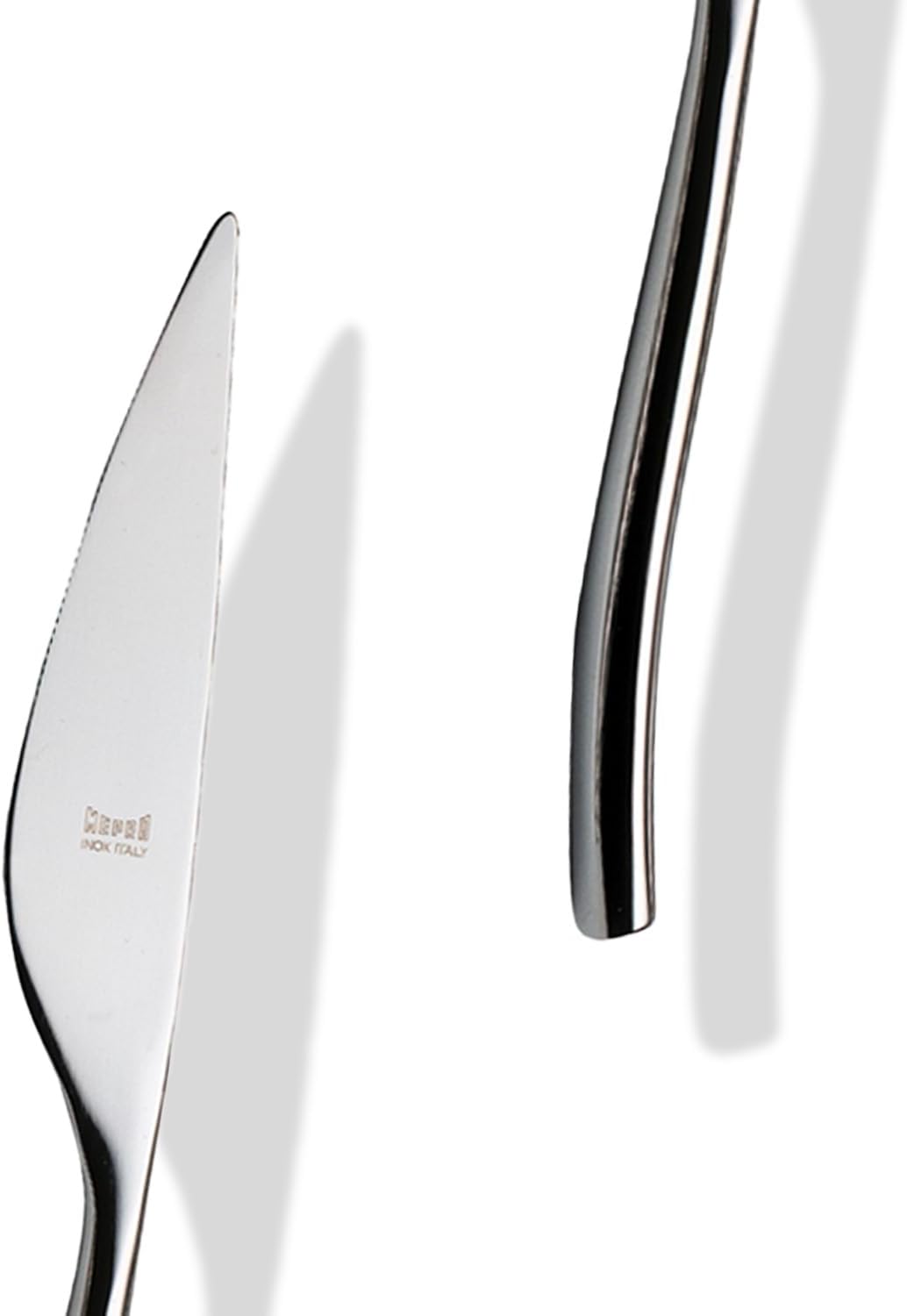
You’ve probably seen the phrase “Made in Italy” on a flatware box and assumed it meant the pieces were hand-finished in some sunlit workshop in Florence or Milan. Sometimes that’s exactly right. More often, it’s more complicated — and for anyone spending real money on a registry, a restaurant program, or a collector’s search, the difference matters enormously. “Made in Italy” is a legal designation (meaning a product’s last substantial manufacturing step happened in Italy), but it doesn’t automatically tell you where the silver was sourced, whether the pattern was designed by an Italian artisan, or whether the piece will feel like an heirloom twenty years from now. This guide walks you through the markers that actually separate genuine Italian-crafted flatware from imported product with Italian branding — and explains why, at certain price points, the provenance premium is real and worth paying for.
| EDITOR'S PICK[MEPRA CUTLERY SET 24 PCS STIRIA](https://www.amazon.com/dp/B00G94BD66?tag=greenflower20-20)… | Mid-tier[Made In Cookware - Flatware Set](https://www.amazon.com/dp/B09S6TP83R?tag=greenflower20-20)… | Budget pick18/10 Stainless Steel Flatware… | |
|---|---|---|---|
| Material | Silver Metallic | — | 18/10 Stainless Steel |
| Piece Count | 24 | 20 | 20 |
| Place Settings | — | 4 | — |
| Made in Italy | — | ✓ | — |
| Style | Stiria | — | Gold Shell Edge |
| Price | $225.00 | $199.00 | $62.87 |
| See on Amazon → | See on Amazon → | See on Amazon → |
Why “Made in Italy” Is a Legal Term, Not a Guarantee of Craft
Italy’s labeling law — as summarized in the Italcam (Italian Chamber of Commerce in the US) document “Made in Italy: Legal Framework and Labeling Requirements” — requires only that the final “substantial transformation” of a product occur on Italian soil. For flatware, that can mean a manufacturer imports stamped blanks from elsewhere, applies a final electroplate or polish in an Italian facility, and legally stamps the piece “Made in Italy.” The label is technically accurate. The craft story, however, is different.
This is not a niche technicality. It’s the core reason two place settings both labeled “Made in Italy” can sit at opposite ends of a $40–$800 per-piece price range and each claim the designation honestly.
What you’re actually hunting for when you want genuinely Italian-crafted flatware — pieces whose value compounds over time, whose patterns are registered to Italian ateliers, and whose metallurgy is specified for longevity — is a convergence of three things: hallmarks, pattern provenance, and manufacturing origin at the piece level. Each one is readable if you know what to look for.
Reading Hallmarks: The Physical Evidence on the Metal
Hallmarks are the most reliable signal, and they’re stamped directly onto the flatware. Italy’s state hallmarking system requires that silver items (925 sterling and silver-plate over a base metal) carry official marks applied by an Assay Office — called the Ufficio di Garanzia. The 925-1000.com Italian Silversmithing Hallmarks Reference Database is the most comprehensive public resource for decoding these marks and is the standard reference used by auction specialists and serious collectors.
What to look for on a genuine piece:
- The fineness mark: On sterling, you’ll see “925” (or, on older Italian pieces, “800” for the lower-grade continental silver standard used historically). Silver-plate pieces carry a different series of marks indicating the base metal and plating thickness.
- The maker’s mark (punzone del fabbricante): A registered symbol identifying the manufacturer or atelier. This mark is filed with the Italian government and tied to a specific workshop address. If a piece carries a maker’s mark you can cross-reference with a registered Italian house — Greggio, Broggi, Cesa, Ricci — you have physical evidence of Italian production.
- The Assay Office mark: A geometric or alphanumeric stamp indicating which Italian assay office verified the metal. Different offices operated in different cities; cross-referencing the office mark with the maker’s claimed location is a quick authenticity check.
On stainless steel pieces (the category Mepra and Sambonet compete in at the professional level), official hallmarking isn’t required by Italian law the same way it is for silver. Here, the key signals shift to ISO-grade specifications and country-of-origin certification on the commercial documentation — relevant for hospitality buyers running procurement contracts, who should be requesting those certificates of conformity as a standard line item.
Pattern Provenance: Where the Design Came From
Hallmarks tell you the metal’s story. Pattern provenance tells you the design’s story — and for collectors and registry builders, this is often the more emotionally and financially significant variable.
Italy’s silversmithing heritage concentrates in three geographic traditions:
- Valenza (Piedmont): Italy’s goldsmithing capital, historically oriented toward jewelry but with crossover into ornate silverware for the fine-dining and ecclesiastical markets. Smaller ateliers here produce limited-run flatware patterns with granulation and filigree techniques that don’t translate to offshore production.
- Florence (Tuscany): The Florentine tradition leans on repoussé work, classical motifs, and the kind of hand-chasing visible in high-end Buccellati patterns. Florentine-made pieces, per the Replacements Ltd Pattern and Provenance Research Archive, command significant secondary-market premiums specifically because the manufacturing method is inseparable from the geography.
- Milan (Lombardy): The industrial silversmithing center — where Mepra operates its professional-line manufacturing and where Sambonet has historical roots. Milan-area production skews toward precision-engineered stainless and silver-plate at commercial scale, prioritizing consistency, durability, and the tight tolerances that hospitality buyers need.
Understanding which tradition a pattern comes from helps you predict resale behavior, replacement availability, and whether you’re buying into a living design language or a discontinued archive. A Valenza atelier pattern with 40 years of production history is a different investment from a Milan-produced professional-line pattern designed for contract replacement cycles.
The tradeoff to name explicitly: Florentine and Valenza hand-crafted pieces carry the richest provenance narrative and the strongest collector premium — but limited production means discontinued patterns disappear fast, and replacement pieces can run 2–4× the original retail price on the secondary market. Milan-produced professional-line pieces (Mepra’s Aretē line, for example) offer documented replacement programs, consistent production runs, and hospitality-grade durability, but they don’t appreciate as collectibles the same way.
The Premium: How Much Is Italian Provenance Actually Worth?
Let’s put numbers on the spread, because it’s wider than most buyers expect.
By the numbers (May 2026 market reference):
| Category | Entry per-piece cost | Heirloom/artisan per-piece cost | Secondary market premium (discontinued Italian patterns) |
|---|---|---|---|
| Italian stainless (18/10, Milan-area) | $8–$25 | $40–$90 | Minimal — active production |
| Italian silver-plate (professional grade) | $35–$80 | $120–$300 | Moderate — 15–40% over retail |
| Italian sterling (925, atelier-produced) | $150–$300 | $400–$800+ | Significant — 50–200%+ for Buccellati, Broggi discontinued |
The Architectural Digest roundup “The Best Italian Flatware Sets” (2025 edition) notes that collectors tracking Buccellati’s discontinued Gianmaria-era patterns through Replacements Ltd and specialist dealers are routinely seeing ask prices 80–120% above the pieces’ original retail price — a pattern that holds across the Christofle Italian-collaboration pieces as well, per the same research.
What drives that premium? Three converging factors: the irreproducibility of hand-chased detail at commercial scale, the scarcity created when an atelier closes or discontinues a pattern, and the growing collector appetite for objects with traceable, documented craft lineage. As Elle Decor’s piece “How to Build a Heirloom Flatware Collection” frames it, the flatware market behaves more like the art market than the housewares market once you move into sterling atelier production — provenance documentation is the price driver, not the per-ounce silver value alone.
For hospitality buyers, the calculation is different. The Spruce Eats’ explainer “What Is 18/10 Stainless Steel Flatware?” lays out the metallurgical baseline: 18/10 refers to the chromium-nickel ratio that determines corrosion resistance and surface hardness — and Italy’s commercial-grade producers (Mepra in particular) publish ISO specifications and independent test data on their professional lines that offshore manufacturers often don’t. That documentation matters when you’re writing a procurement contract with a 3- or 5-year replacement clause.
Decision Rules: If X, Then Y
You’re somewhere in a buying decision right now. Here’s how to map what you’ve just learned to a clear next move.
If you’re building a registry and want pieces that will outlast the marriage: Prioritize hallmark-bearing sterling or high-grade silver-plate from a maker with a registered punzone. Request the maker’s mark reference from the retailer and cross-check it against the 925-1000.com database before purchasing. Budget for the per-piece range that puts you in Greggio or Ricci territory ($150–$400 per piece), not the stainless-adjacent silver-plate that lives below $80.
If you’re a hospitality buyer sourcing a 12- to 50-cover program: The provenance premium doesn’t serve your use case — durability, replaceability, and documentation do. Focus on Milan-area professional lines with published ISO specs and active replacement programs. Request certificates of conformity and a written replacement guarantee as contract terms. Mepra’s professional catalog and Sambonet’s hotel-line documentation are the reference benchmarks against which you should evaluate any competing bid.
If you’re a collector hunting discontinued Italian patterns: Your first call is always Replacements Ltd’s specialist research team, who can tell you what’s in inventory and what the current ask-to-market ratio looks like for a given pattern. Your second call is authenticating the maker’s mark before paying a premium — the 925-1000.com database is free to use and catches misattributed pieces regularly. Pieces with both the fineness mark and a traceable punzone are worth the premium; pieces with only “Made in Italy” stamped on the handle are not.
If you’re earlier in the journey and a Sambonet or Mepra stainless set is your current price range: That’s not a consolation prize — it’s a foundation. Italy’s industrial silversmithing culture runs through Mepra’s professional-grade 18/10 as much as it runs through Buccellati’s sterling. Learn the hallmark system now, while the stakes are low. The intuition you build reading marks on a $120 Sambonet set is the same intuition you’ll use to authenticate a $600 Florentine piece five years from now.
The “Made in Italy” label is a starting point, not a conclusion. The craft, the hallmarks, and the pattern history are the conversation — and once you know how to read them, you’ll never look at a flatware box the same way again.